“Killing oneself is not an act, but a process”
This blog will address the relationship between victims of Post Traumatic Stress Disorder and what leads some to committing suicide.
The War Within
According to va.org in 2017, the average number of veterans who die by suicide each day is 17. This number accounts for 13.5% of all deaths by suicide among U.S. adults. Va.org defines a veteran as someone who, “Served in the active military, naval, or air service and who was discharged or released under conditions other than dishonorable.” Above I mentioned the quote that describes suicide as a process not an act, and I believe one of the reasons people as a whole, not just veterans, commit suicide is because of isolation. Mentalhealth.va.gov reports that, “Among Veterans Health Administration patients, suicide rates have been found to be highest among those who were divorced, widowed, or never married…” Specifically referring to veterans, professors from the Department of Psychology at East Tennessee State University found that PTSD symptoms (Depression, anger, and internal hostility) were positively related to suicide risk. I believe these symptoms all stem from the mind, and eventually express themselves externally in the victim’s life. To support this claim, Ptsd.va.gov says that, “Many veterans experience highly intrusive thoughts and extreme guilt about acts committed during times of war.” For example, Stacy L. Pearsall, a U.S. Air Force veteran, expressed that, “When you experience something as extraordinary as what you may experience in combat, these things kind of stick with you, and they may live in a really dark place.” All of these factors combined leads to a high risk of suicide for military veterans. One way to fight these suicidal happenings, is for veterans at risk to seek help. If you know a veteran, please reach out and let them know they are not alone. On the homepage I have included a link to to the National Suicide Prevention Lifeline.
Childhood Trauma
The National Childhood Traumatic Stress Network defines Childhood Trauma as, “When a child feels intensely threatened by an event he or she is involved in or witnesses.” These events are classified under 12 categories that include: Bullying, Community Violence, Complex Trauma, Disasters, Early Childhood Trauma, Intimate Partner Violence, Medical Trauma, Physical Abuse, Refugee Trauma, Sexual Abuse, Terrorism and Violence, and Traumatic Grief. In this blogpost, I will be primarily focused on childhood emotional neglect and emotional abuse. Healthline.com explains that childhood emotional neglect, “Occurs when a child’s parent or parents fail to respond adequately to their child’s emotional needs.” In other words, emotional neglect is more unintentional when compared to emotional abuse. The U.S. government defines emotional (or psychological) abuse as, “A pattern of behavior that impairs a child’s emotional development or sense of self-worth.” Emotional abuse occurs across all races and socioeconomic statuses; it does not discriminate. A psychiatry and psychotherapy study from the Catholic University of Pelotas in Brazil evaluated 917 individuals, and found that 55 were diagnosed with PTSD. Their findings showed that, “The suicide risk prevalence in individuals with PTSD was 63.6%.” They also found that emotional neglect and emotional abuse scores tended to be higher in the suicide risk group. Some examples of emotional neglect and abuse are manipulation, constant criticism, threats, abandonment, etc. This does not go to say that these are the only childhood traumas that leave some with suicidal tendencies. A survey from Matthew K. Nock and Ronald C. Kessler published in the Journal of Abnormal Psychology found that, “A history of sexual molestation, physical abuse, and neglect as a child were associated with high rates of suicide attempts (17.4% to 23.9%).” It is important to note that association/correlation does not equate to causation. As I mentioned on the home page, suicide is a process. Individuals who attempted or committed suicide often have multiple pressing factors in their lives at the time. In other words, PTSD is just one of the descending steps on their path of destruction. For some, this path begins in their childhood.
Disaster in the Mind
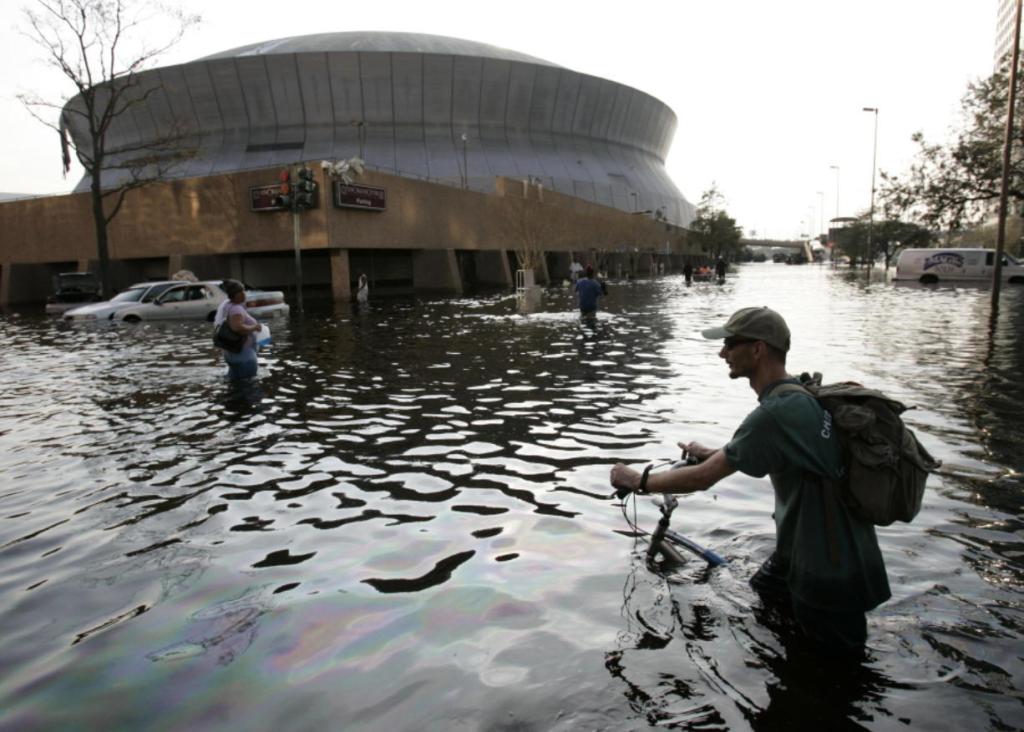
I am from New Orleans, Louisiana and I moved to Georgia because of Hurricane Katrina. The devastation of this natural disaster left damaging effects beyond the destruction of physical infrastructure. Today, there are still many suffering from Katrina; in the city and in the mind. Psychologytoday.com explains that natural disasters can be, “sudden and overwhelming.” In natural disasters people lose their homes, their cars, and even their loved ones. We live in a materialistic world where many place their value in what they have. Once these things are lost, there are a range of symptoms some may face: intense negative feelings, flashbacks, confusion, fear of another disaster occurrence, or difficulty sleeping/ eating. These may sound familiar because they are common symptoms of Post Traumatic Stress Disorder. Through my research of finding an association between PTSD and suicide after a natural disaster, I found that these are often studied separately. Researchers, for example psychiatrictimes.com and the New England Journal of Medicine, found that suicide does increase after a natural disaster but not directly as a result of PTSD. Their studies showed that suicide and mental problems, like PTSD, increase after certain natural disasters like hurricanes and floods. But they did not look at the relationship between suicide after a natural disaster and PTSD.
A collective of professors from all across the world (Lily Brown, Christina Fernandez, Robert Kohn, Sandra Saldivia, and Benjamin Vicente) conducted a study in the Journal of Affective Disorders where they studied 2,832 participants from Chile with pre-disaster PTSD, and tried to find the progression of thoughts of suicide and death in the participitants over the time between pre- and post-natural disasters. Their results showed that there was an increase in suicidal ideation from pre- to post- disaster within those who had pre-disaster PTSD. This all goes to say that those who have suffered a natural disaster deserve mental health attention. Natural disasters are already devastating but combined with pre- existing mental health issues, they can become detrimental to someone’s life.
Sexual Assault
Sexual violence happens to men, men,women, and children all over the world. It also occurs in various settings. There are numerous testimonies from victims that were assaulted in the military, at school, and even at home. One example of sexual assault is rape. Once someone is raped, they often experience feelings of shame, guilt, anxiety, fear, distrust, paranoia, etc. These feelings are synonymous with those of PTSD. Overtime these feelings lessen in intensity. Ptsd.va.gov reports that “94/100 women experienced PTSD symptoms two weeks following the rape. After nine months, 30/100 still reported symptoms.” WCSAP.org says that those who attempt suicide more often show higher levels of PTSD when following a traumatic event, such as sexual victimization.
Suicide.org reports that Depression and PTSD are common among rape victims. When these conditions go unnoticed, they can lead to suicidal ideation or a suicide attempt. NSVRC.org found that “Over 1/3 of women rape survivors have contemplated suicide at some point after their assault and 13% had attempted suicide.” Another study from WCSAP.org showed that underage males who are abused by a same-sex perpetrator are five times more likely to attempt suicide than males who weren’t sexually victimized.
Through my research I found that most sexual assault victims do not end up committing suicide or considering it. The ones that do are the ones who were abused and then experienced intense depression and PTSD in the aftermath. It is our responsibility to keep watch over our loved ones to make sure their cares/struggles don’t go unnoticed.
Summary
Post Traumatic Stress Disorder can take place after a number of events. This blog focused on the relation of PTSD to suicide after the experience of a war, childhood trauma, a natural disaster, and sexual assault. There is no cure for PTSD, but there are steps one can take to get better. Experiencing a traumatic event takes a toll on one’s mind psychologically. Furthermore, one will experience more than PTSD after a traumatic event. For example with sexual assault, victims reported experiencing PTSD and Depression. It is important to remind victims that they are not alone and that suicide is not the answer. There is always better ahead. Thank you for reading today. 🙂
Works cited:
Bach, Suelen de Lima, ed. “Suicide risk and childhood trauma in individuals diagnosed with posttraumatic stress disorder.” Trends in Psychiatry and Psychotherapy, 40(3), pp. 253-257 .https://doi.org/10.1590/2237-6089-2017-0101 Accessed 14 Feb. 2020.
Brown, Lily A et al. “Pre-disaster PTSD as a moderator of the relationship between natural disaster and suicidal ideation over time.” Journal of affective disorders vol. 230 (2018): 7-14. doi:10.1016/j.jad.2017.12.096
Caruso, Kevin. “Rape Victims Prone to Suicide.” Rape Victims Prone to Suicide – Suicide.org, http://www.suicide.org/rape-victims-prone-to-suicide.html.
Healthline.com. Healthline Media, https://www.healthline.com/health/child-neglect-and-psychological-abuse. Accessed 14 Feb. 2020.
Krug, Etienne G., et al. “Suicide after Natural Disasters: NEJM.” New England Journal of Medicine, 14 Jan. 1999, http://www.nejm.org/doi/full/10.1056/NEJM199802053380607.
Mckinney, Jessica, ed. “PTSD symptoms and suicide risk in veterans: Serial indirect effects via depression and anger.” Journal of Affective Disorders, vol 214, pp. 100-107, https://www.sciencedirect.com/science/article/abs/pii/S0165032716318043?via%3Dihub. Accessed 31 Jan. 2020.
Nock, Matthew & Kessler, Ronald. ” Prevalence of and Risk Factors for Suicide Attempts Versus Suicide Gestures: Analysis of the National Comorbidity Survey.” Journal of Abnormal Psychology. pp. 115. 616-23. 10.1037/0021-843X.115.3.616.
Oseldman. “Trauma Types.” The National Child Traumatic Stress Network, 25 May 2018, http://www.nctsn.org/what-is-child-trauma/trauma-types.
“VA.gov: Veterans Affairs.” Types of Trauma, 14 Sept. 2018, http://www.ptsd.va.gov/PTSD/understand/types/index.asp.
“VA.gov: Veterans Affairs.” Veteran Suicide Data, 14 Sept. 2018, http://www.mentalhealth.va.gov/suicide_prevention/data.asp.
“VA.gov: Veterans Affairs.” What Is PTSD?, 14 Sept. 2018, http://www.ptsd.va.gov/understand/what/index.asp.
 Briana Thomas